
ABOUT US
The Mission
Our mission is to create a thoughtful and ethical framework where personal development aligns with respect for all life, a commitment to justice, and a dedication to environmental stewardship.
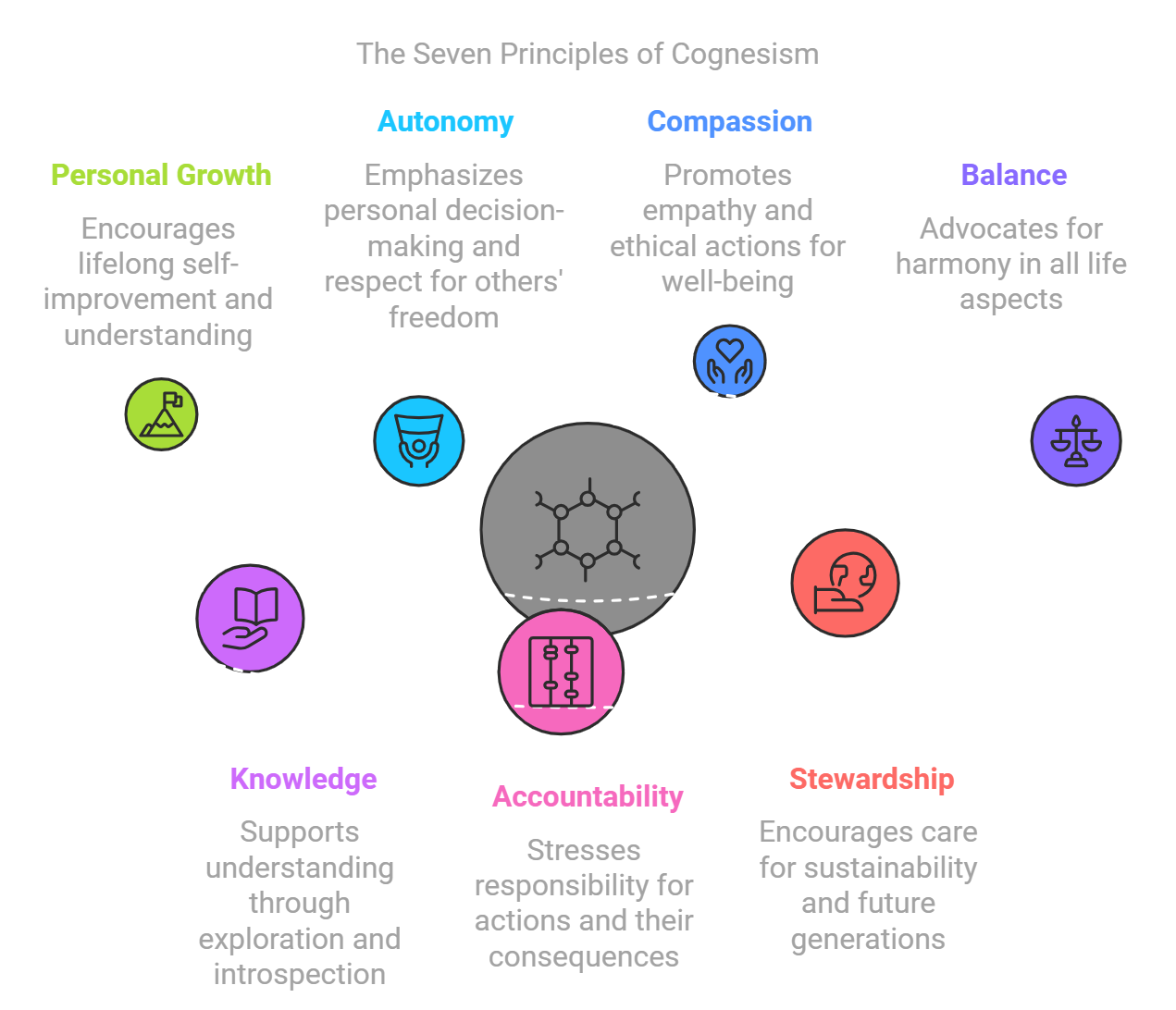
Core Concepts of Cognesism
Seven Principles
I. Personal Growth
Personal growth and self-realization are lifelong pursuits. Strive to better understand yourself and your role in the world, constantly seeking to evolve. Believe in your own potential and power as you grow and shape your life with integrity.
II. Autonomy
Your body, mind, and will are subject to your own decisions. Exercise your autonomy responsibly while respecting the freedom and autonomy of others.
III. Compassion
Act with compassion and empathy toward all beings, within reason, recognizing the interconnectedness of life. Ethical actions should promote well-being for both individuals and the
environment.
IV. Balance
Live with balance, maintaining harmony in all aspects of life. Balance is essential for sustaining both personal power and the harmony of the world around you.
V. Knowledge
Seek understanding through both scientific exploration and introspection. Allow your beliefs to evolve as you grow, ensuring that they align with both reason and personal truth.
VI. Accountability
Take responsibility for your actions, both in the present and in anticipation of future consequences. Personal accountability is essential for growth and integrity.
VII. Stewardship
Embrace your role as a steward of the Earth and all life. Act with care, ensuring your impact supports sustainability, balance, and the well-being of future generations.
Key Ideas
What Makes Cognesism Unique?
While Cognesism shares elements with many belief systems, its unique qualities lie in its combination of scientific understanding, personal autonomy, and environmental responsibility.
Science and Nature as Sacred: Unlike traditional religions, Cognesism doesn’t rely on gods or spiritual figures. Instead, it elevates the pursuit of scientific knowledge and understanding of the natural world to a sacred level. Nature and energy are revered, but through the lens of science and curiosity, rather than mythology or divine worship.
Focus on Self-Belief: While many religions encourage faith in a higher power or external forces, Cognesism centers its belief system on the self. Personal growth, autonomy, and the belief that individuals can shape their lives are core tenets. This contrasts with belief systems that encourage submission to divine will or fate.
Blending of Individualism and Interconnectedness: Cognesism manages to balance the idea of individual autonomy with the recognition that all beings are interconnected. Each person is responsible for their actions, but those actions reverberate through the web of existence. This combination allows for a unique approach to ethics, where both personal freedom and communal responsibility are emphasized.
Environmental Stewardship: While many belief systems advocate for caring for the Earth, Cognesism places a unique emphasis on stewardship as a personal responsibility, driven by both ethics and science. The focus is on understanding the Earth’s cycles and acting in ways that contribute positively to the environment and the greater web of life.
Cognesism shares similarities with a variety of belief systems, from Taoism’s focus on balance to Pagan’s reverence for nature and The Satanic Temple’s emphasis on personal autonomy. However, it remains distinct in its grounding in scientific principles, its rejection of divine authority, and its commitment to both self-belief and environmental responsibility. As a modern belief system, Cognesism offers a unique perspective that blends individual empowerment with communal and environmental ethics, providing a fresh answer to age-old religious and philosophical questions.